
Aptixx builds the systems a business runs on, not the ones it markets with.
Aptixx is a Canadian software firm that designs and builds operational software — workflow systems, calculation and planning tools, field and reporting systems, and customer portals — for complex, growing businesses.
01Who Aptixx is
Control of the workflows the business depends on.
Operational software is the entire practice.
How Aptixx builds operational software sets out each system in practice. The same discipline is sold as solution architecture when the system is not yet defined, and as MVP development for a startup’s first version. Process automation covers workflows where the cost is manual work.
02How Aptixx works
Cost, evidence and ownership are settled before features are.
Four commitments hold on every engagement.
- 01Production systems, not demos. Every build ends in something people use on a Tuesday morning. The marine draft-survey platform is in production with the client’s survey team — the standard the rest of the work is held to.
- 02Numbers you can count yourself. 1,630 automated test cases in one delivered system. 46 versioned database migrations. Row-level security verified enabled on 117 of 117 tables in a live audit. Every figure is countable in the codebase or the database it came from.
- 03Bounded engagements, bought one at a time. Fit call, discovery sprint, operational MVP, improve. The sprint stands alone if you build elsewhere.
- 04You own the code and the data. Repositories, migrations, schema, documentation and credentials are yours from the first commit. Nothing runs on a proprietary runtime, and every integration is documented for the next team to pick up.
20 minutes, free, no obligation — you keep the read on fit either way.
03Who you work with
Senior engineering judgment stays in the room.
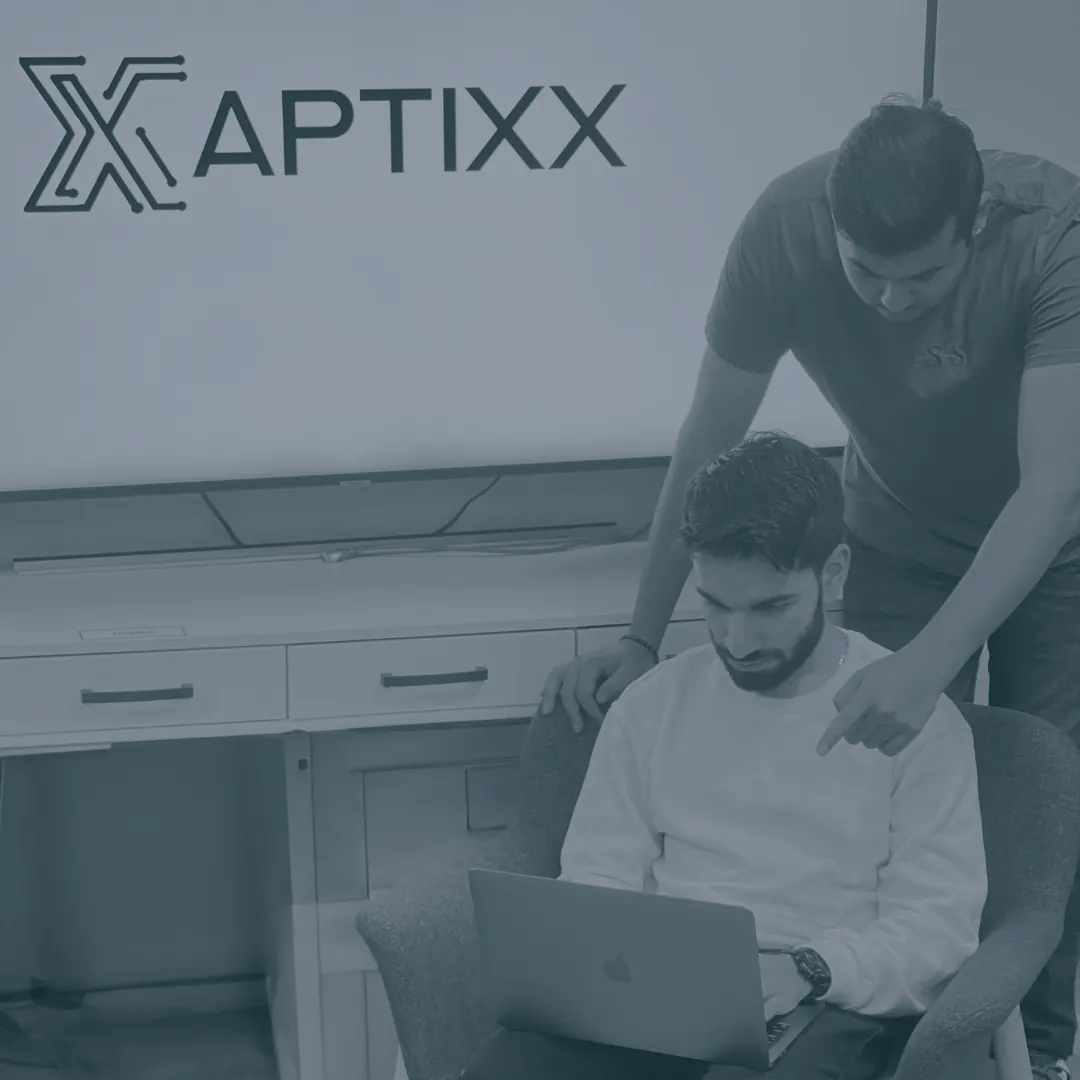
Aptixx is led by Agam Aneja, a software engineer and product builder across web, mobile, data, AI and regulated operations. The engineer shaping the architecture, the trade-offs and the delivery schedule is the person you talk to — from the fit call through production.
We take on the workflow a business cannot afford to get wrong, and the engagement is finished when your team runs the system without us.
04The working model
Budget is decided four times, not once.
Each step below is scoped, priced and bought on its own — stop after any of them and keep everything produced so far.
01 — Fit call
20 minutes, free
Confirm the business problem, who owns it, how urgent it is, and where the scope boundary sits. If Aptixx is not the right fit, you will know inside the call.
02 — Paid sprint
Discovery sprint
Map the workflow as it runs today, prototype the core of it, assess integration risk, and write the build definition. You keep every artifact.
03 — Operational MVP
Ship the smallest system
The smallest production system that changes how the work runs, scoped from what the sprint found rather than from a wish list.
04 — Improve
Stay covered, on retainer
An optional monthly retainer after handoff: support, monitoring, measurement, and the next workflow worth automating. Month to month, and the code stays yours either way.
Duration, price band, outputs, exclusions and the credit-toward-build policy are published on the discovery sprints page.
05Where the experience comes from
Evidence from operations where a wrong number is expensive.
Regulated cultivation and marine surveying — arithmetic, audit trails and reporting that had to survive inspection from outside the business.
Trazo OS: multi-tenant cultivation operations
Built under contract for Trazo Global Inc. — batches, inventory, telemetry, purchasing and a Metrc compliance module configured for 26 US jurisdictions.
Read the case studyDraft-survey platform for a BC marine surveyor
Hydrostatic interpolation, dock-water density correction, and signed PDF certificates — reproducing a previously issued certificate to the cent.
Read the case studyAptixx also scopes bilingual, multi-entity case management for regulated service businesses, with build specifications that cite the regulation and define the schema to the column.
Next step
Put the workflow in front of the person who would build it.
Twenty minutes with Agam: your workflow, a straight read on fit, and the next step either way. Nothing to prepare.